Shadow, Suffering, Awakening

Dark Spiritual Fantasy

Dark spiritual fantasy does not use suffering as wallpaper. Darkness becomes a pressure that exposes the person carrying it. Grief can harden into vengeance. Power can disguise hunger as purpose. A descent can become the first honest encounter with the self. These stories ask what remains when comforting answers have burned away.

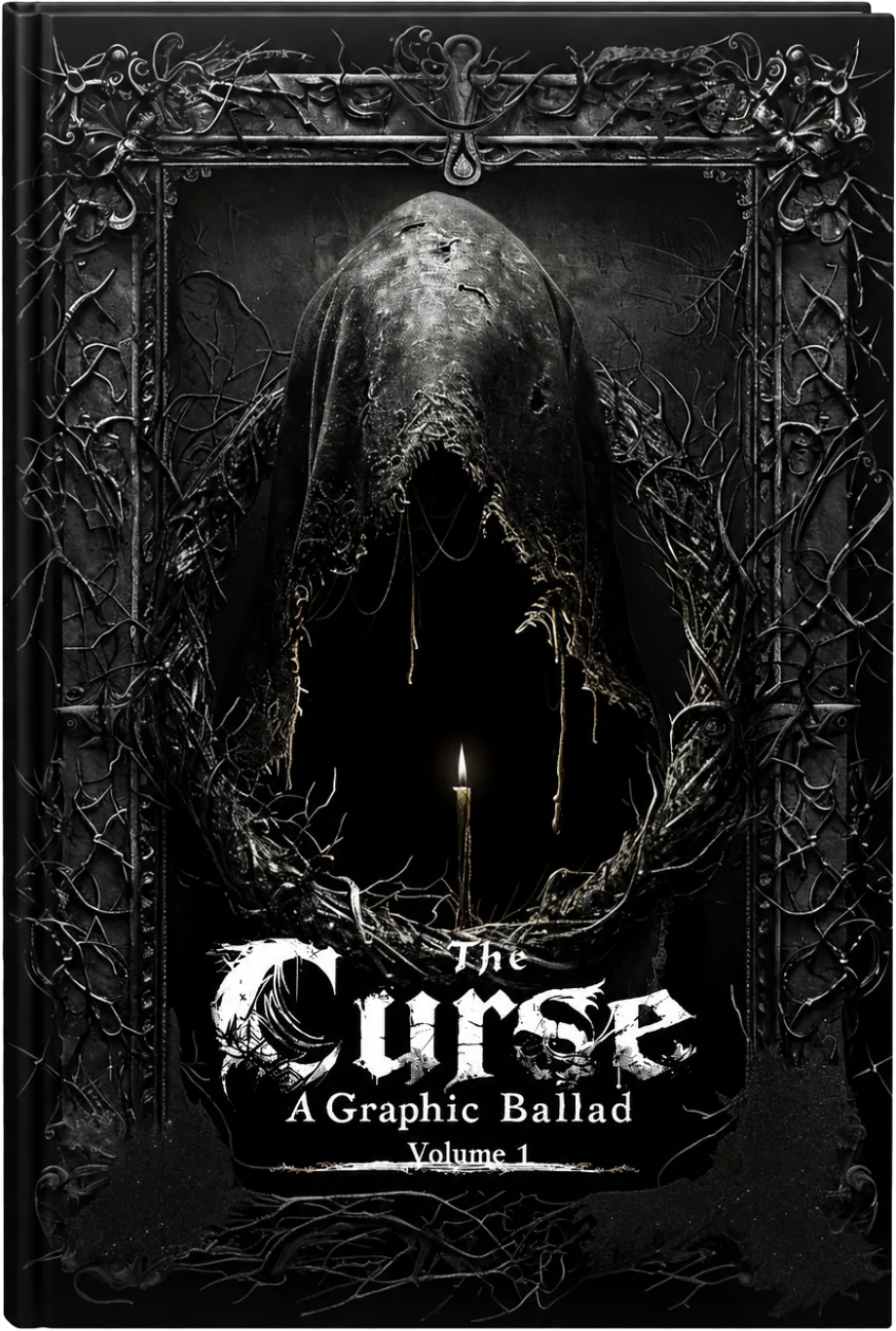
The Curse I dark spiritual fantasy graphic ballad

A Door Into the Catalog

Start With The Curse I

A graphic ballad of grief, vengeance, darkness, and awakening.

Explore the Books

Darkness With a Purpose

There is a difference between a bleak story and a spiritually dark one. A bleak story may describe a cruel world. Dark spiritual fantasy asks what cruelty awakens, distorts, or reveals. Its shadows are not always enemies. Sometimes the shadow is the part of the self that has been refused for too long. Sometimes the apparent enemy carries a fragment of truth that the hero is not ready to hear.

This does not mean that every wound is secretly good or that suffering should be romanticized. It means that the story refuses to waste pain. It follows consequence. It allows grief, rage, attachment, fear, and the hunger for control to change the direction of a life.

The Curse as the First Door

The Curse I is the clearest entry into this territory. It is a graphic ballad: an illustrated story shaped by compression, rhythm, and symbolic pressure. Its darkness is intimate before it becomes cosmic. A wound opens. Vengeance gathers. The seeker is forced toward a threshold where destruction and awakening can no longer be cleanly separated.

The Curse II carries that pressure onward through an alchemical structure of transformation. The darker road is not a straight descent into hopelessness. It passes through stages, reversals, and the difficult possibility that what feels like annihilation may also expose what was false.

Shadow Is Not the Same as Evil

Dark spiritual fantasy becomes more interesting when light and darkness are not reduced to a child's moral diagram. Light can reveal, guide, and heal, but it can also blind when it becomes a self-image. Darkness can conceal danger, but it can also hold the parts of experience that easy optimism refuses to face.

The Path of None returns to that tension across worlds. The seeker must confront external danger without pretending the inner danger has vanished. The monster outside the gate matters. So does attachment. So does the desire to become powerful enough never to feel helpless again.

Grief, Attachment, and the Shape of the Self

Buddhist traditions begin with a sober recognition: suffering is intensified by clinging. That does not make love a mistake. It makes the relationship between love, loss, identity, and possession worth examining. A person can be broken by what was taken, then broken again by the attempt to force the world to return what cannot be restored in the same form.

This is why grief is not a side theme inside The Curse. It is the wound around which the spiritual conflict forms. For readers looking for that specific current, continue with dark fantasy books about grief and transformation.

Companion Books for the Shadowed Road

Berserk Deluxe Volume 1 by Kentaro Miura belongs here because damage, endurance, rage, and loyalty retain consequence. The Buried Giant by Kazuo Ishiguro approaches a different darkness: memory, forgetting, love, and wounds that a society cannot simply erase.

A Wizard of Earthsea by Ursula K. Le Guin offers one of fantasy's clearest encounters with shadow and responsibility. The Shadow of the Torturer by Gene Wolfe opens a stranger, morally unsettled dying-earth labyrinth.

None of these books offers a recipe for enlightenment. They matter because the darkness changes the question rather than merely deepening the color palette.

Where the Dark Road Leads Next

After The Curse, The Spiral widens the field. Its seeker crosses dreams, trials, worlds of light and shadow, sorrow, battle, silence, and remembrance. The Ascent turns the question inward again through the image of a mountain whose obstacles mirror fear, pride, doubt, illusion, and the recurring patterns of the self.

If you want a reading path, begin with The Curse I. If you want a broader essay on why broken worlds can still carry meaning, read Dark Souls, Berserk, and the Search for Meaning in Dark Fantasy.

Why Darkness Can Clarify a Spiritual Question

A comfortable world can allow a character to remain comfortably mistaken about himself. Dark fantasy removes that shelter. Under pressure, stated beliefs collide with action. A person who speaks about freedom may still be controlled by vengeance. A person who worships light may still use it to avoid seeing an unwanted truth. A seeker who claims to want awakening may secretly want the power and certainty associated with it.

The genre becomes spiritually useful when it holds those contradictions open. It should not declare cruelty meaningful merely because it occurred. It should examine what cruelty produces, what the wounded person does next, and whether the hunger for retaliation becomes another form of captivity.

New to The Path of None? Begin with The Curse I, read sample pages, or follow the complete reading order.