Poetic Illustrated Storytelling

Graphic Ballads

A graphic ballad is an illustrated narrative shaped by compression. It is not simply a comic with fewer panels. It is not a prose novel with pictures added afterward. It is not a poetry collection decorated with fantasy art. Words, images, rhythm, and recurring symbols carry one emotional movement together.

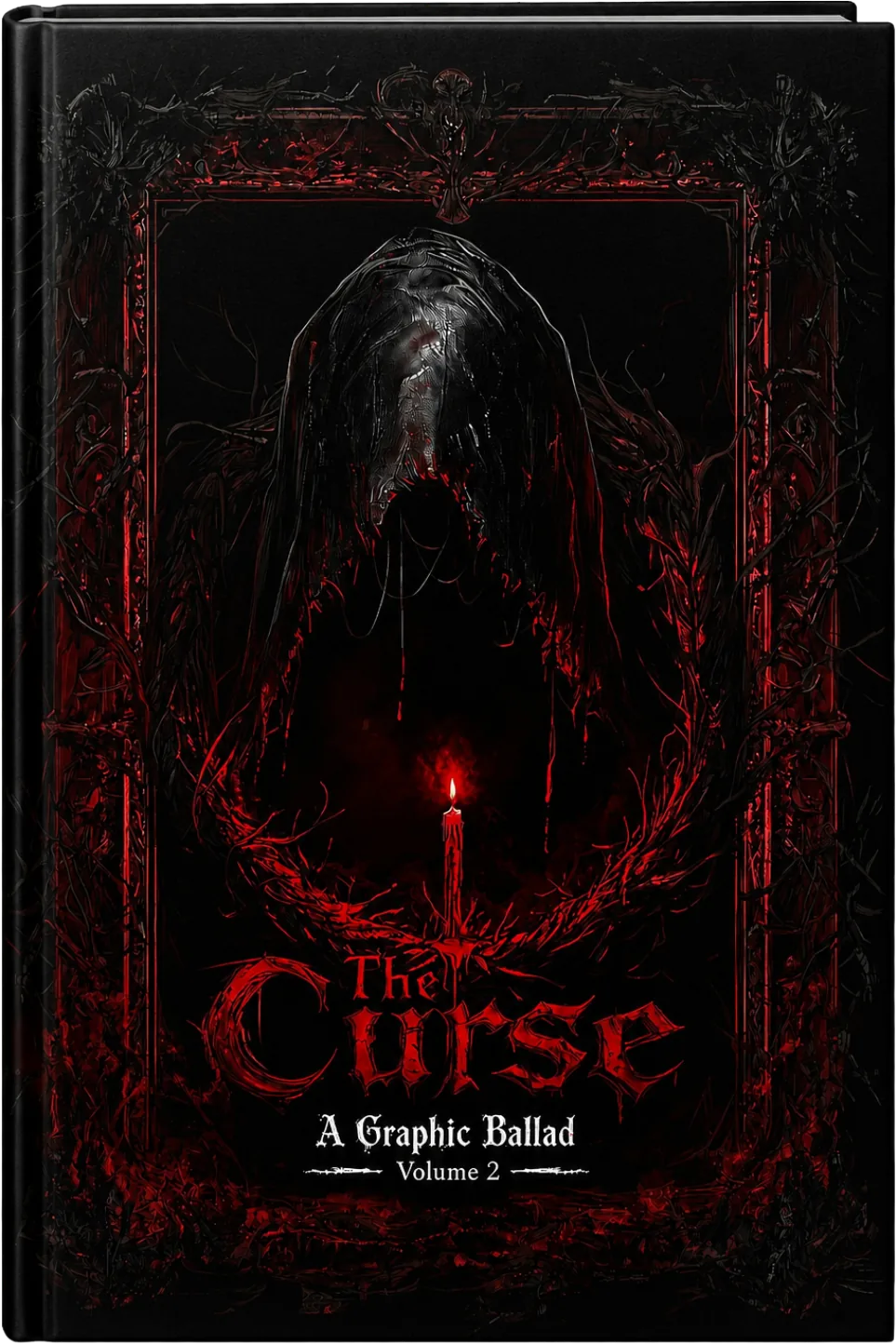
The Curse II graphic ballad by Alexander Gabriel ZoderoT

A Door Into the Catalog

Read The Curse I

The first door into the graphic-ballad form: dark fantasy, grief, image, and awakening.

Explore the Books

A Form Built Around Compression

A conventional novel can expand through scenes, interior thought, description, and dialogue. A conventional comic can divide movement into sequential panels and visible action. A graphic ballad may borrow from both, but it asks each page to carry more symbolic weight. A full-page image can hold the emotional force of a chapter. A stanza can turn visible action into inner revelation.

Compression does not mean thinness. It means concentration. The reader is asked to slow down, remain with the image, hear the rhythm of the language, and notice how repeated symbols change as the story deepens.

Graphic Novel, Illustrated Novel, or Graphic Ballad?

The distinction is not a hierarchy. A graphic novel excels at sequential storytelling. An illustrated novel can remain fully legible as prose while its images enrich atmosphere, character, or world. A graphic ballad creates a tighter dependency between image and language: remove either one and the intended movement weakens.

That is why the clearest explanation is not a label alone. Read Graphic Novel vs. Illustrated Novel vs. Graphic Ballad, then open the sample reader and feel the difference directly.

The Curse I and II

The Curse I is the foundational entry: a dark spiritual fantasy descent through grief, vengeance, and awakening. Its pages use image and compressed language as two voices pressing on the same wound. The Curse II intensifies the form through sustained verse and alchemical stages of transformation.

The result sits near dark fantasy comics, illustrated poetry, mythic art books, and spiritual allegory without collapsing into any one of them. The hybrid nature is the point. The story needs the pressure created where those forms meet.

Why the Ballad Matters

The old ballad carries story through rhythm, repetition, image, and emotional force. It does not require exhaustive explanation. It trusts a charged fragment to remain alive in the listener. A graphic ballad brings that instinct into visual storytelling. The page is not only read. It is encountered.

This makes the form particularly suited to dark spiritual fantasy. Dreams, thresholds, memory, grief, prophecy, and transformation often lose force when overexplained. A symbolic image can remain open without becoming vague. A short passage can strike, echo, and leave room behind it.

Companion Books for Visual Storytelling

The Sandman Book One by Neil Gaiman and its artists demonstrates how dream, horror, folklore, and story can fold into one another. Monstress, Vol. 1: Awakening by Marjorie Liu and Sana Takeda offers ornate visual density shaped by trauma, war, and power.

Hellboy Omnibus Volume 1 by Mike Mignola takes the opposite visual route: shadow, negative space, occult history, and disciplined restraint. These are not graphic ballads, but each demonstrates how visual form can carry meaning rather than merely illustrate action.

For a broader guide to neighboring forms, continue to illustrated novels for adults who want something darker.

How to Read a Graphic Ballad

Do not rush to finish a page because the word count is low. Notice the relationship between the text and the visual center. Notice what the frame hides, what the image repeats, and where the language changes register. Some pages move narrative forward. Others deepen a state of mind. Others act almost like visual verses.

Begin with The Curse I, read the fuller journal essay What Is a Graphic Ballad?, or compare the form with other illustrated novels for adults who want something darker.

Visual Rhythm Is Part of the Sentence

In a graphic ballad, pace does not come only from the length of a paragraph. It comes from the distance between images, the return of a symbol, the weight of a page turn, the amount of darkness surrounding a figure, and the decision to let one visual moment remain unresolved. The reader is not asked to decode a puzzle mechanically. The reader is asked to remain attentive.

This is one reason full-page artwork matters. A large image refuses the speed of a thumbnail. It creates an encounter. A figure, threshold, flame, ruin, or landscape can remain present long enough to gather associations that no caption should close too quickly.

A Form for Myth, Grief, and Transformation

Graphic ballads are especially suited to inner journeys because symbolic experience rarely moves in a straight explanatory line. Grief repeats. Dreams return altered. Memory breaks and reforms. An apparent enemy may become a mirror without ceasing to be dangerous. The form can hold those contradictions without forcing them into a single summary.

For the concise definition, read What Is a Graphic Ballad?. For the practical comparison, open Graphic Novel vs. Illustrated Novel vs. Graphic Ballad.

New to The Path of None? Begin with The Curse I, read sample pages, or follow the complete reading order.