The Art of War
The Art of War Summary: All 13 Chapters Explained
What each chapter of Sun Tzu's treatise says, with one key verse from each in Lionel Giles' 1910 translation.
The Art of War is short enough to read in one evening: thirteen chapters of numbered verses. Most people never do. They know it from a handful of quotations, and some of those are not even his. Below is what each chapter actually argues, in order, with one verse from each exactly as Lionel Giles translated it in 1910. The pictures are the paintings that open the chapters in The Art of War Illustrated.
I. Laying Plans
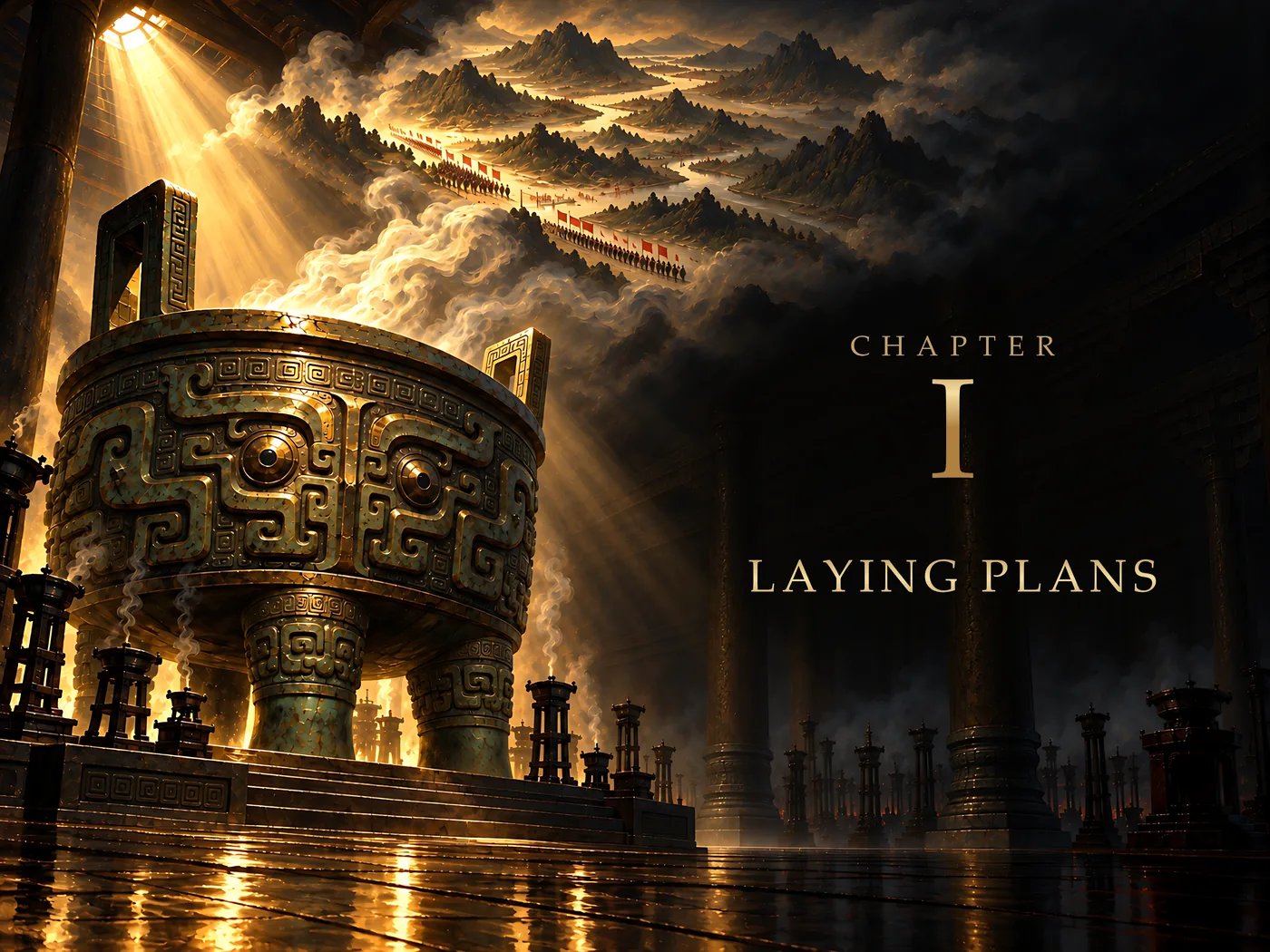
Sun Tzu opens by calling war a matter of life and death for the State, then names the five constant factors a general must weigh before any campaign: the Moral Law, Heaven, Earth, the Commander, and Method and discipline. From them he builds seven questions that forecast victory or defeat, and he insists that the battle is won by calculation before it is fought.
“All warfare is based on deception.”
II. Waging War
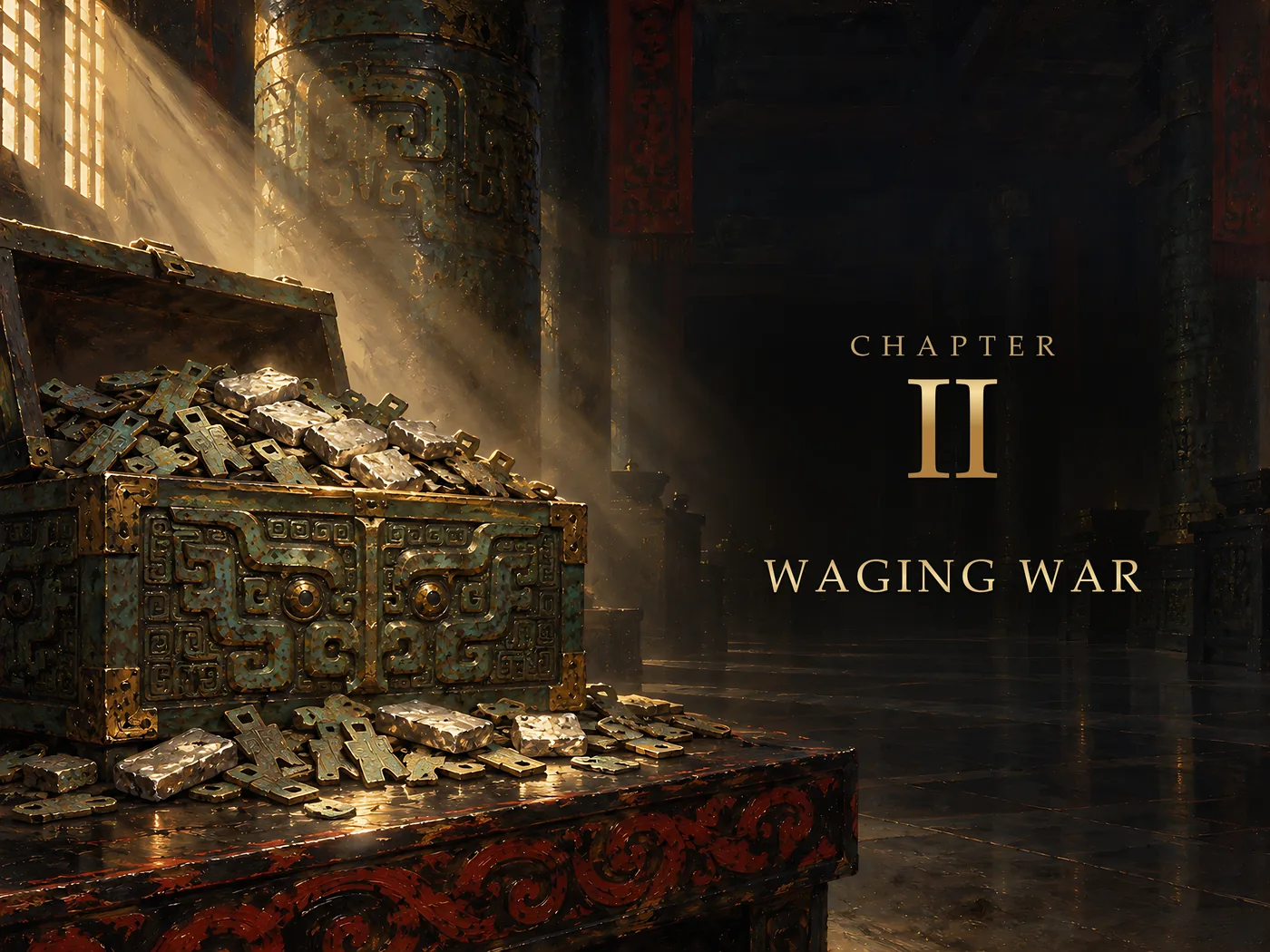
The second chapter counts the cost. A long campaign dulls weapons, empties the treasury and invites rivals to strike at an exhausted state, so speed matters more than cleverness. Sun Tzu advises foraging on the enemy, rewarding the men who capture the first chariots, and treating captured soldiers kindly.
“In war, then, let your great object be victory, not lengthy campaigns.”
III. Attack by Stratagem
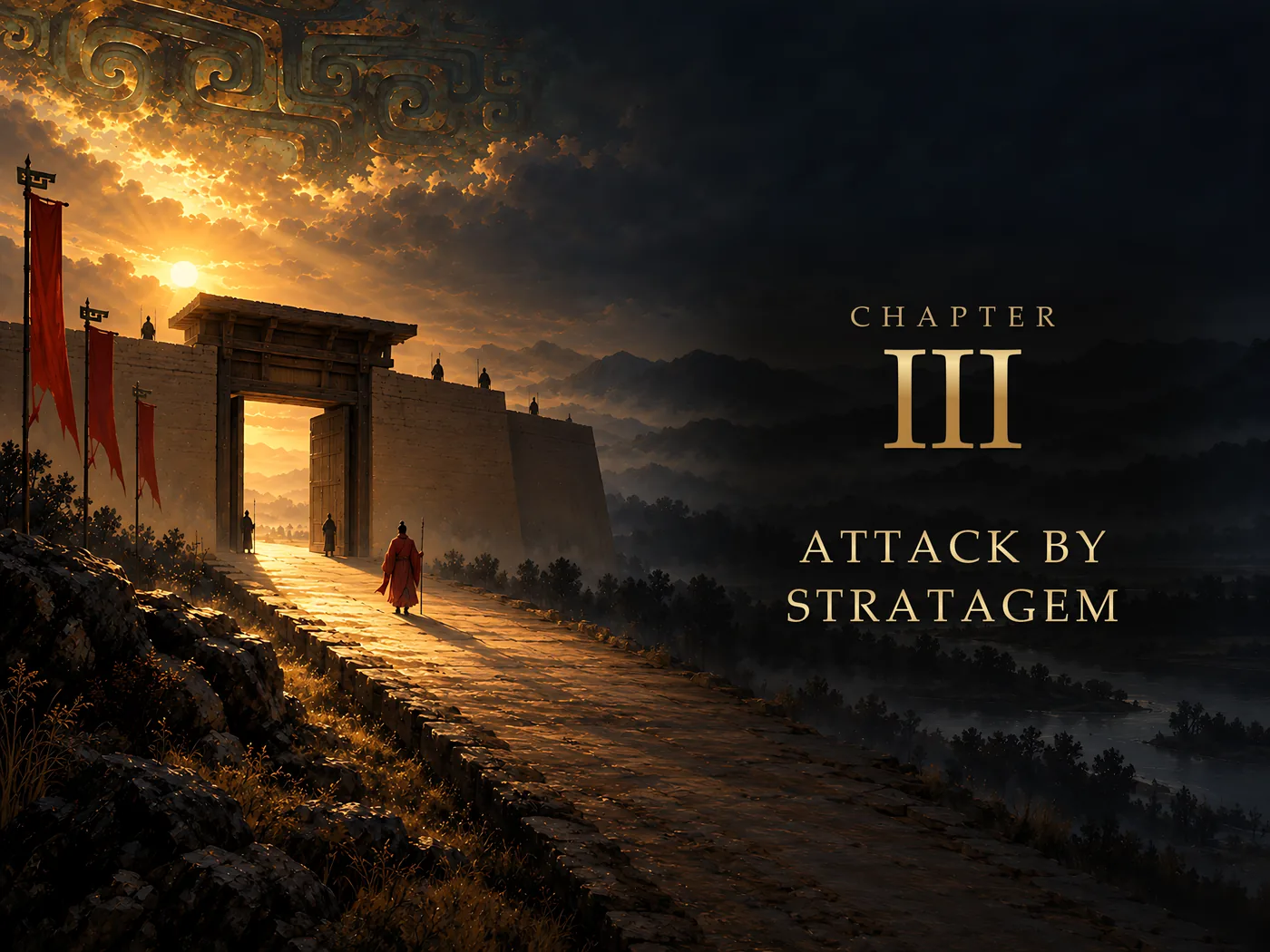
Here Sun Tzu ranks the ways of winning: best is to take the enemy whole, next to break his alliances, then to meet his army in the field, and worst of all to besiege walled cities. He warns how a ruler can ruin his own army, lists five essentials for victory, and ends with the most quoted lines of the book.
“Hence the saying: If you know the enemy and know yourself, you need not fear the result of a hundred battles. If you know yourself but not the enemy, for every victory gained you will also suffer a defeat. If you know neither the enemy nor yourself, you will succumb in every battle.”
IV. Tactical Dispositions
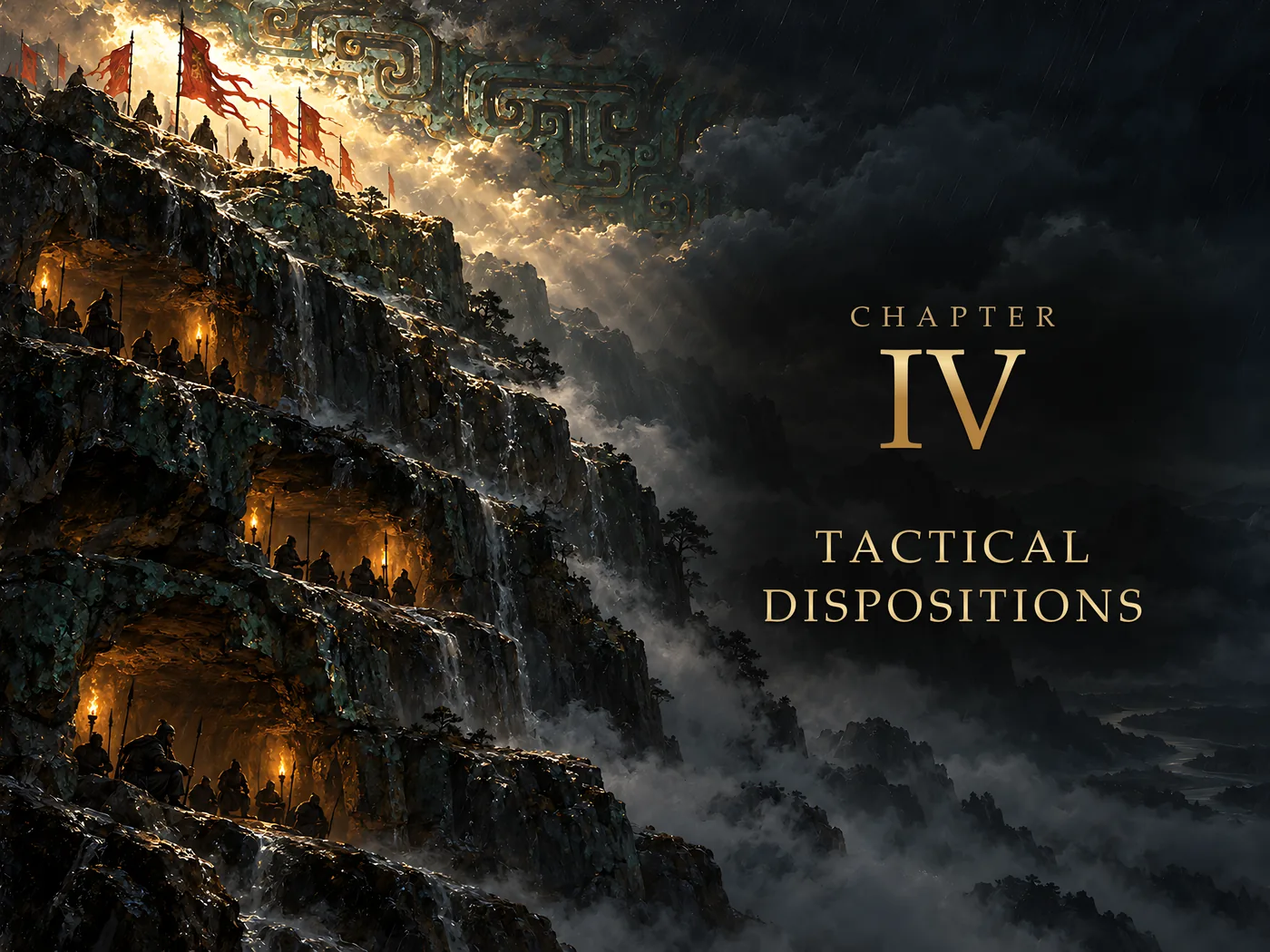
The good fighter first makes himself impossible to defeat, then waits for the enemy to offer the opening. Real skill looks easy and earns no fame, because the victory was secured before the fighting began. The chapter closes with the image of a conquering force bursting like pent-up water into a chasm.
“Thus it is that in war the victorious strategist only seeks battle after the victory has been won, whereas he who is destined to defeat first fights and afterwards looks for victory.”
V. Energy

Energy is about combination and timing. Direct and indirect methods mix as endlessly as five notes make melodies and five colours make hues. Decision should strike like a falcon, and an army in motion should gather the momentum of a round stone rolling down a mountain.
“Energy may be likened to the bending of a crossbow; decision, to the releasing of the trigger.”
VI. Weak Points and Strong
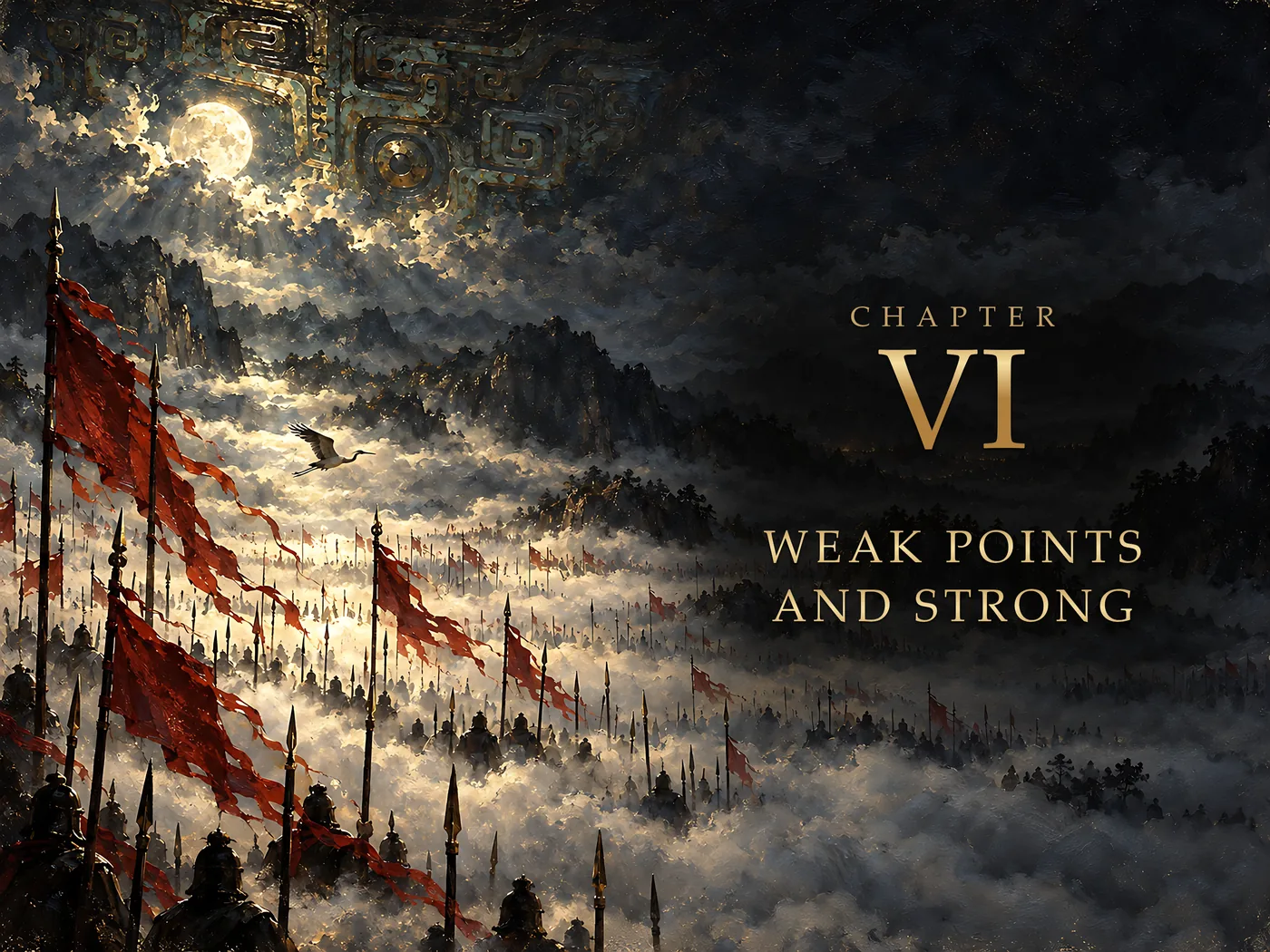
The clever general imposes his will instead of yielding to the enemy's: he arrives first, appears where he is not expected and attacks what is undefended, while keeping his own dispositions hidden. Sun Tzu compares tactics to water, which runs from high ground and shapes its course to the land.
“So in war, the way is to avoid what is strong and to strike at what is weak.”
VII. Manœuvering
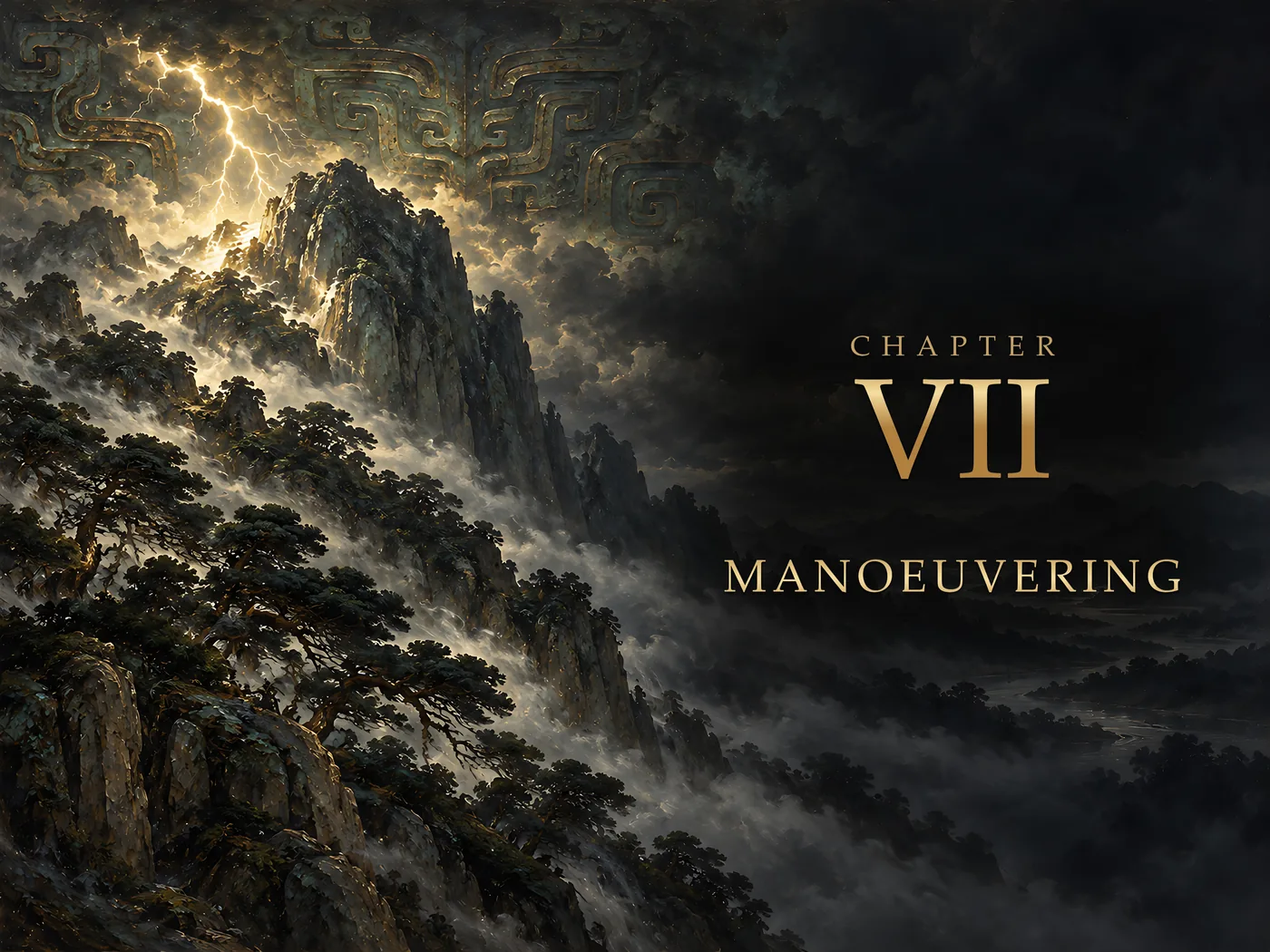
Manœuvering is the hardest art: turning the long way round into the short one. Sun Tzu warns against forced marches that leave an army scattered, tells the general to know the country and use local guides, and gives the famous images of wind, forest, fire and mountain. He ends on reading the enemy's moods and leaving a cornered army a way out.
“Let your plans be dark and impenetrable as night, and when you move, fall like a thunderbolt.”
VIII. Variation of Tactics
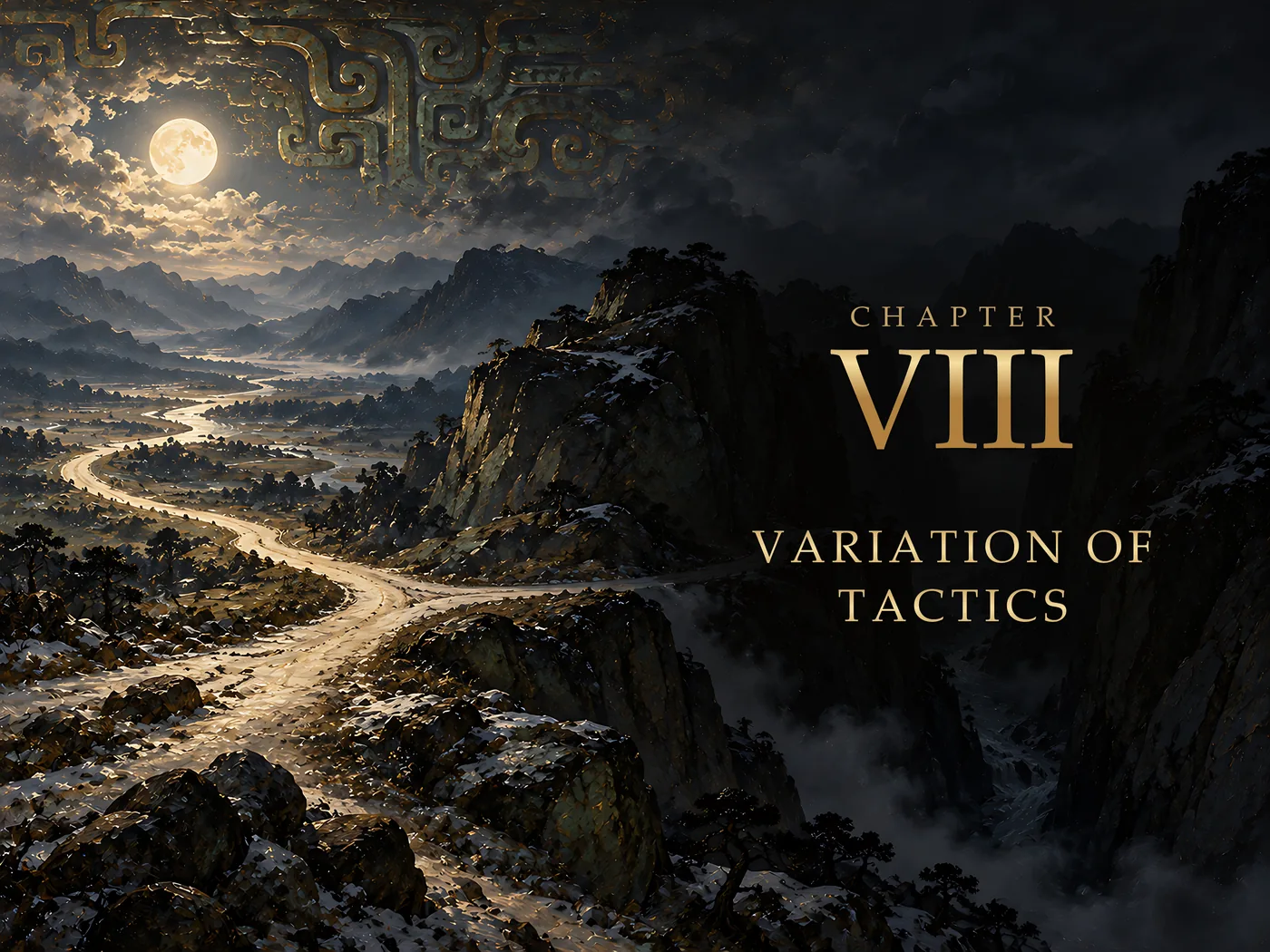
A short chapter on flexibility. There are roads not to be taken, cities not to be besieged and even commands of the sovereign not to be obeyed. A wise leader weighs advantage and danger together, relies on his own readiness rather than the enemy's absence, and guards against five faults of character that ruin generals.
“The art of war teaches us to rely not on the likelihood of the enemy’s not coming, but on our own readiness to receive him; not on the chance of his not attacking, but rather on the fact that we have made our position unassailable.”
IX. The Army on The March
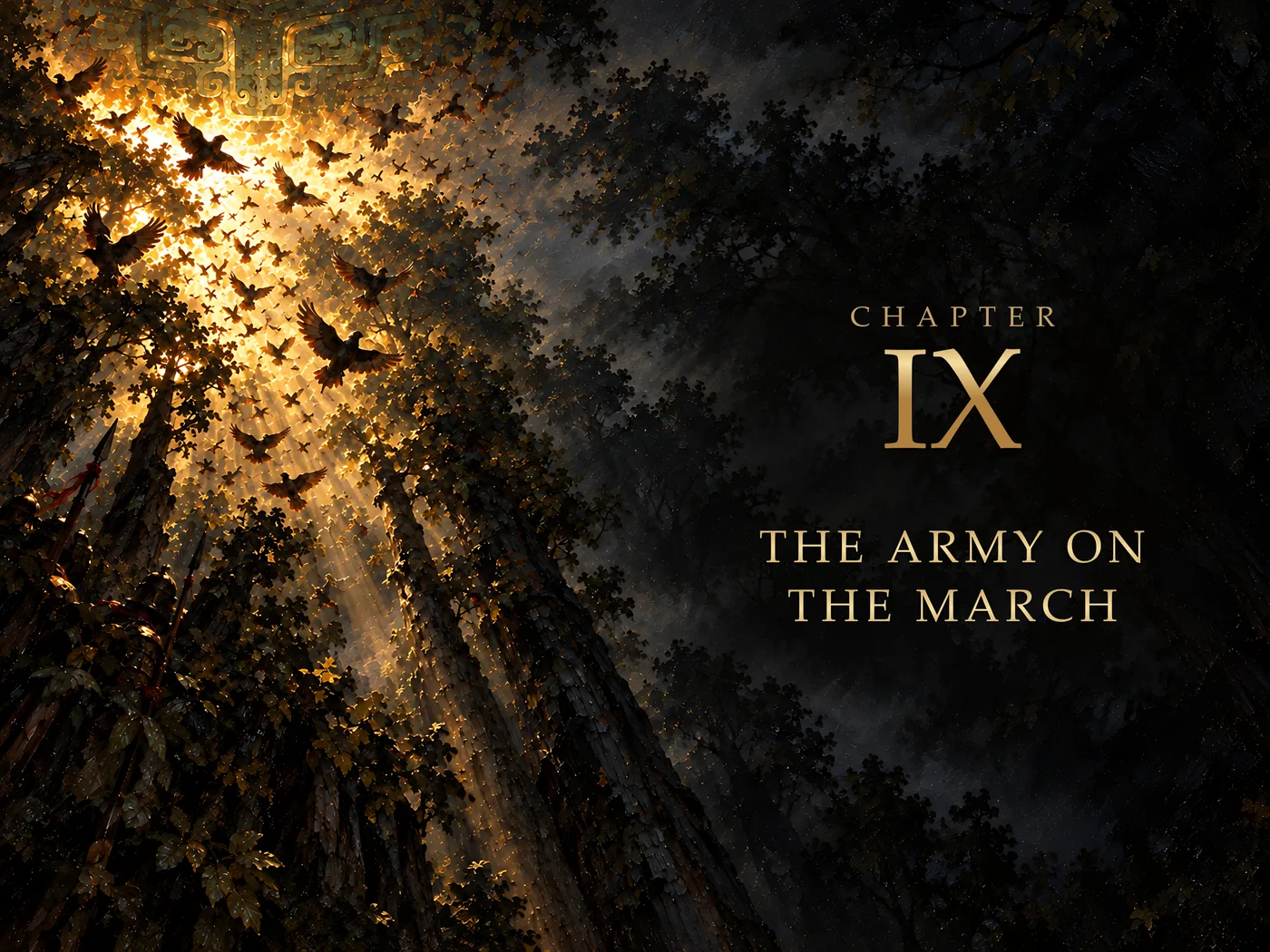
Practical advice for an army in the field: how to cross mountains, rivers and salt-marshes, where to camp, and above all how to read the signs around you, from dust and birds to the behaviour of enemy envoys. It ends on discipline: soldiers treated first with humanity, then held by iron discipline.
“The rising of birds in their flight is the sign of an ambuscade. Startled beasts indicate that a sudden attack is coming.”
X. Terrain

Sun Tzu names six kinds of ground and six calamities that come not from nature but from the general's own faults. A great general reads the country, judges the enemy and cares for his soldiers like his own sons, yet keeps the authority that stops kindness from spoiling them.
“Regard your soldiers as your children, and they will follow you into the deepest valleys; look on them as your own beloved sons, and they will stand by you even unto death.”
XI. The Nine Situations
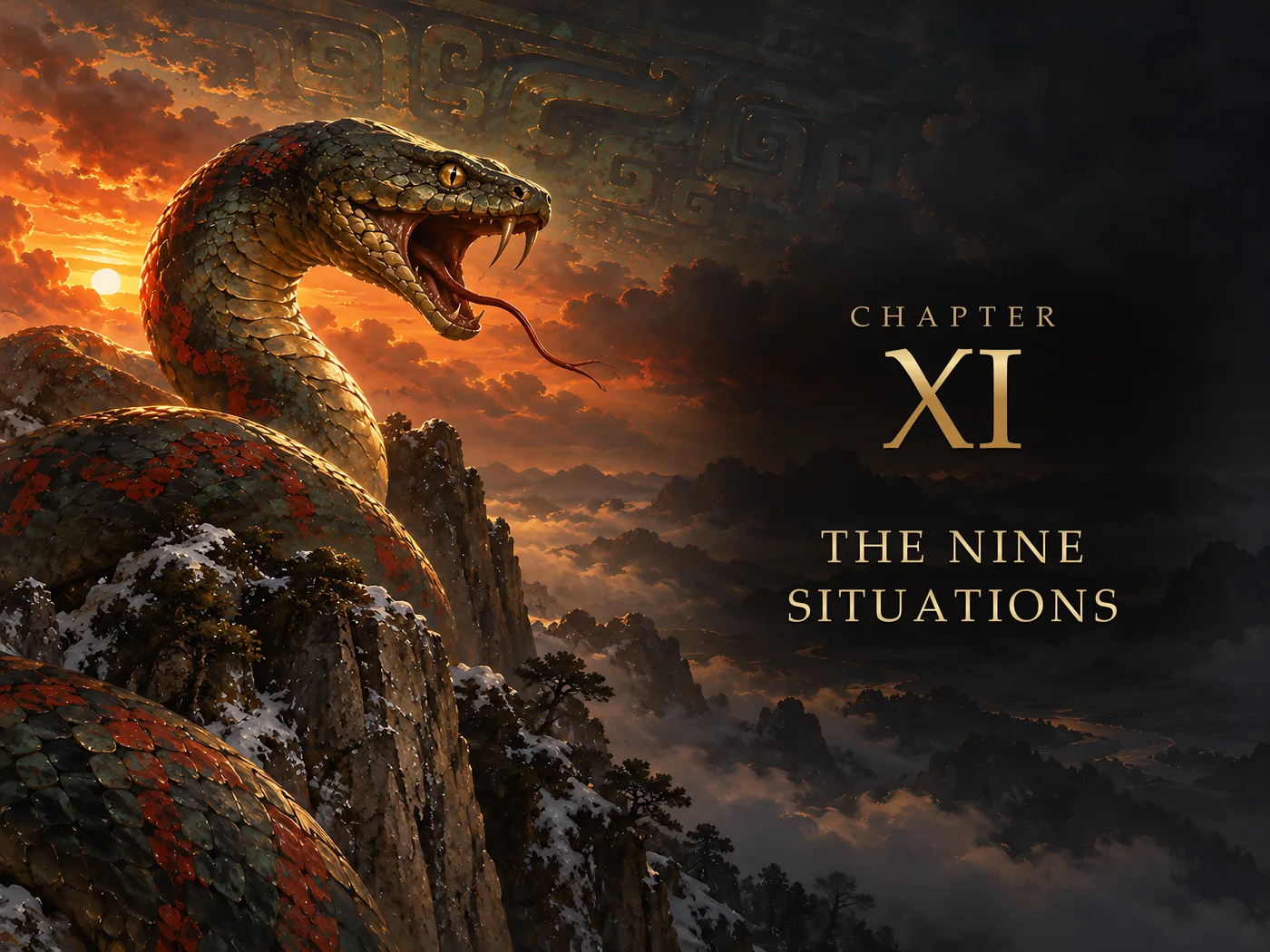
The longest chapter sets out nine kinds of ground, from dispersive to desperate, with the right conduct for each. Its central idea is that men brought to bay fight hardest, and that an army should move as one body, like the mountain snake that strikes back from head and tail.
“At first, then, exhibit the coyness of a maiden, until the enemy gives you an opening; afterwards emulate the rapidity of a running hare, and it will be too late for the enemy to oppose you.”
XII. The Attack by Fire
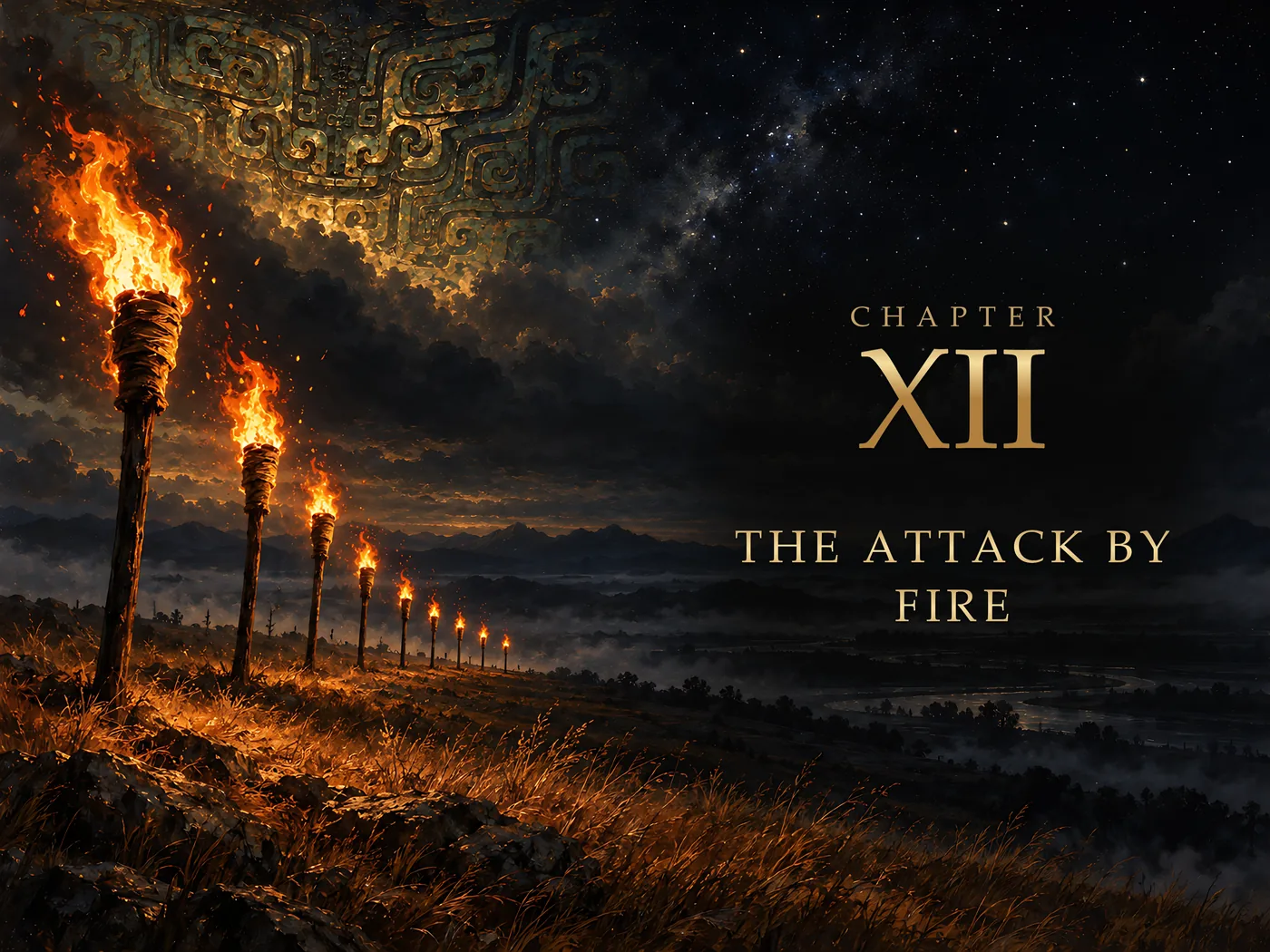
Five ways to attack with fire and the conditions each needs. The chapter then turns sharply: a ruler must never send troops out of anger, because anger passes, while a destroyed kingdom and the dead never return.
“But a kingdom that has once been destroyed can never come again into being; nor can the dead ever be brought back to life.”
XIII. The Use of Spies
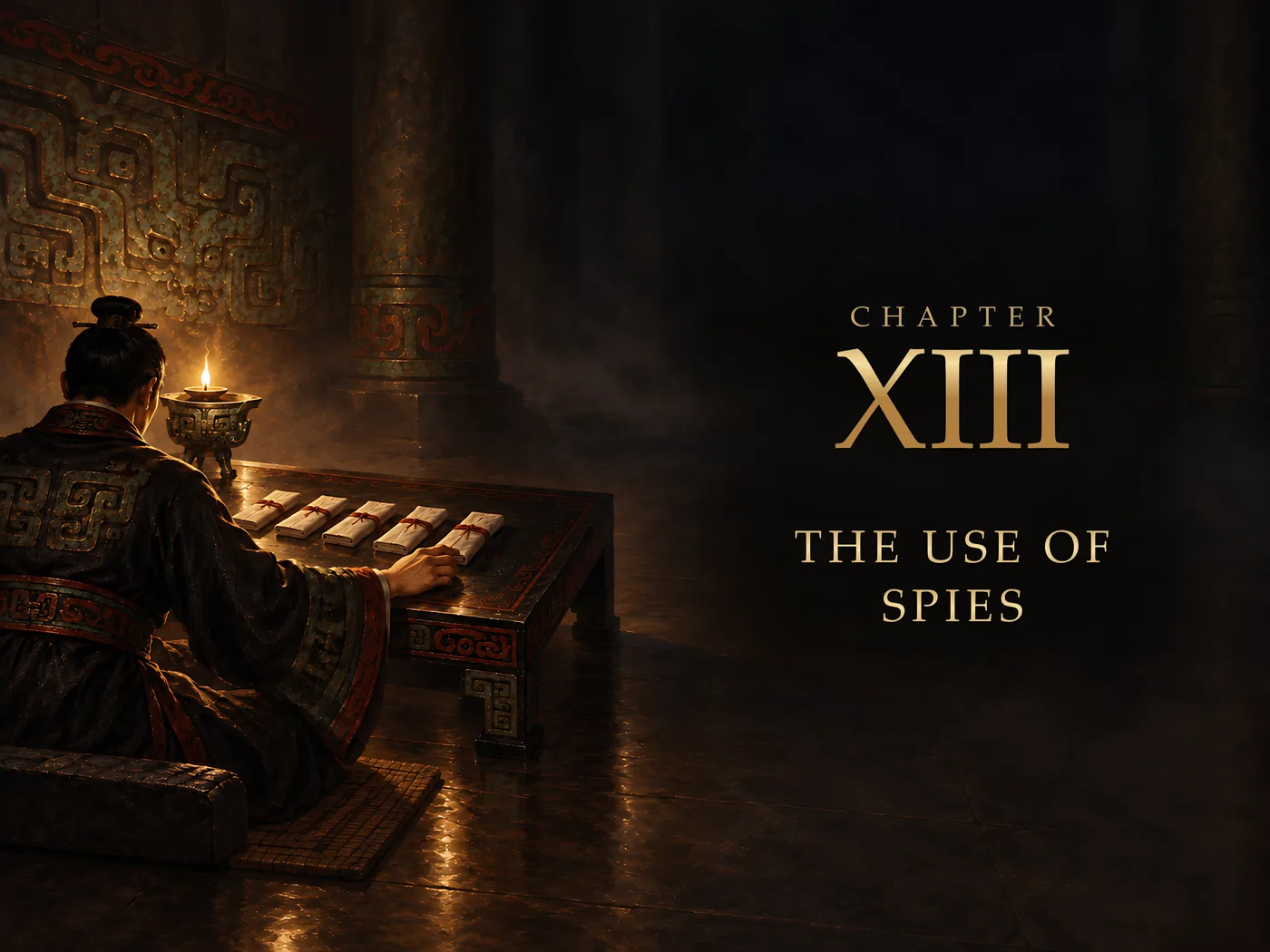
The book ends with foreknowledge, which cannot come from spirits or calculation but only from other men. Sun Tzu describes five kinds of spies and why the converted spy, the enemy's agent turned, is the most valuable of all.
“Thus, what enables the wise sovereign and the good general to strike and conquer, and achieve things beyond the reach of ordinary men, is foreknowledge.”
Reading the whole text
Thirteen paragraphs can tell you what the chapters argue. The voice is in the verses, and that is why people quote them instead of summing them up. Thirty of the most quoted have their own page, each with chapter and number. And if you are unsure about a line you have seen online, sixteen popular ones are checked against the text.
The Inner Circle
Join the Circle
The next book is already taking shape in the dark.
Be the first to know about new releases, exclusive content, hardcover drops, and glimpses behind the veil of ZoderoT's worlds.
No spam. No noise. Only the signal that matters.